
Boundaries: spot your patterns & break the myths that keep you stuck
Patterns recognition tip: Lack of boundaries reveal themselves through resentment, exhaustion, and anxiety.
Boundaries: spot your patterns & break the myths that keep you stuck
Most people think boundaries are walls. In reality, boundaries are bridges: they help you stay connected without losing yourself. But here's the truth: Most of us were never taught how to set healthy boundaries.
Boundary-busting myths (which ones do you believe?)
Myth 1: 'Boundaries are selfish.' Science says the opposite - people with healthy boundaries have more satisfying relationships and lower stress levels. Myth 2: 'If I set boundaries, I'll upset people.' You might. But people who benefit from your lack of boundaries will be the only ones upset. Myth 3: 'If I really loved them, I wouldn't need boundaries.' Love requires boundaries. Otherwise it becomes resentment, not connection. Myth 4: 'Good people don't say no.' Emotionally healthy people say no all the time. It's how they stay grounded and available. Myth 5: 'I should be able to handle everything.' A lack of boundaries is not strength - it's self-neglect. Myth 6: 'If I don't explain myself fully, my boundary doesn't count.' No is a complete sentence. Full stop. Myth 7: 'I'll set boundaries once things calm down.' The chaos is caused by the lack of boundaries. If you checked several, you're not alone - you're human.
Why we struggle to set boundaries (the psychology behind it)
There are real, science-backed reasons why boundaries feel hard: 1. Fear of Rejection - The brain processes rejection like physical pain. So we avoid anything that risks upsetting someone. 2. Childhood Conditioning - If you were raised to be 'easy,' 'good,' or 'selfless,' boundaries feel disobedient. 3. People-Pleasing Patterns - You learned to prioritize others to stay safe or loved. 4. Nervous System Response (Fawn) - Some people default to appeasing others to avoid conflict. 5. Identity Confusion - If you're used to over-functioning, you might not know what your needs even are. Understanding this isn't an excuse - it's empowerment. Awareness is the first step toward change.
Types of boundaries (spot your patterns)
Boundaries aren't one thing. They show up across every part of life. 1. Emotional Boundaries - Saying how you feel, not taking responsibility for others' emotions, protecting your emotional energy. Pattern to spot: Do you absorb everyone else's feelings? 2. Physical Boundaries - Personal space, rest, alone time, body autonomy. Pattern to spot: Do you feel guilty resting or needing space? 3. Time Boundaries - How much time you give others, work-life separation. Pattern to spot: Are you overcommitted or chronically rushed? 4. Work Boundaries - Delegation, clear workload limits, ending work at a reasonable hour. Pattern to spot: Do you overwork to feel worthy? 5. Relationship Boundaries - Respect, communication, expectations, dealbreakers. Pattern to spot: Do you tolerate behavior that drains you?
More types of boundaries
6. Family Boundaries - Holidays, traditions, parental expectations, sibling roles. Pattern to spot: Do you still play the childhood role (the fixer, the peacekeeper, the responsible one)? 7. Parenting Boundaries - Time alone, division of labor, emotional labor limits. Pattern to spot: Do you feel guilty taking even a moment for yourself? 8. Health Boundaries - Sleep, diet, movement, stress management. Pattern to spot: Do you sacrifice your health to meet expectations? 9. Digital Boundaries - Screen-time, responding to texts, social media consumption. Pattern to spot: Do you feel pressured to be constantly available?
How to look at your patterns
Start with these reflection questions: Who drains me most - and why? Where do I feel resentful or exhausted? Where do I say yes but mean no? What do I tolerate that hurts me? Who benefits from my lack of boundaries? When do I abandon myself to keep the peace? Patterns reveal themselves through resentment, exhaustion, and anxiety. These are signals, not failures.
Why you should set boundaries (the benefits)
Science shows boundaries improve: emotional regulation, self-esteem, mental health, relationship satisfaction, physical wellbeing, stress resilience, sense of identity, respect from others. Boundaries don't push people away. They keep the right people close and the wrong people out.
How to start setting boundaries
You don't need dramatic confrontations. Start with the smallest possible step. 1. Start Noticing Your Yes/No Ratio - If you say yes automatically, pause. Try: 'Let me get back to you.' 2. Set Micro-Boundaries First - Small but mighty: 'I can't talk right now.' 'I need a few minutes.' 'That doesn't work for me.' 'Please don't speak to me like that.' 3. Expect Discomfort - Discomfort doesn't equal wrong. It means you're breaking an old pattern. 4. Practice with Safe People - Start where the stakes are lowest. 5. Define Your Non-Negotiables across mind, body, relationships, purpose. Ask: 'What do I need to feel safe, respected, and well?' 6. Notice When You Feel Resentful - Resentment equals boundary needed. 7. Build Boundary-Muscle Memory - Repetition rewires the brain. Boundary-setting gets easier because your nervous system learns it's safe.
Key Takeaway
Boundaries are not barriers. They are invitations - for healthier relationships, deeper self-respect, and a life that feels like yours. Your boundaries are a map of how you care for yourself. Clear, loving, and strong.
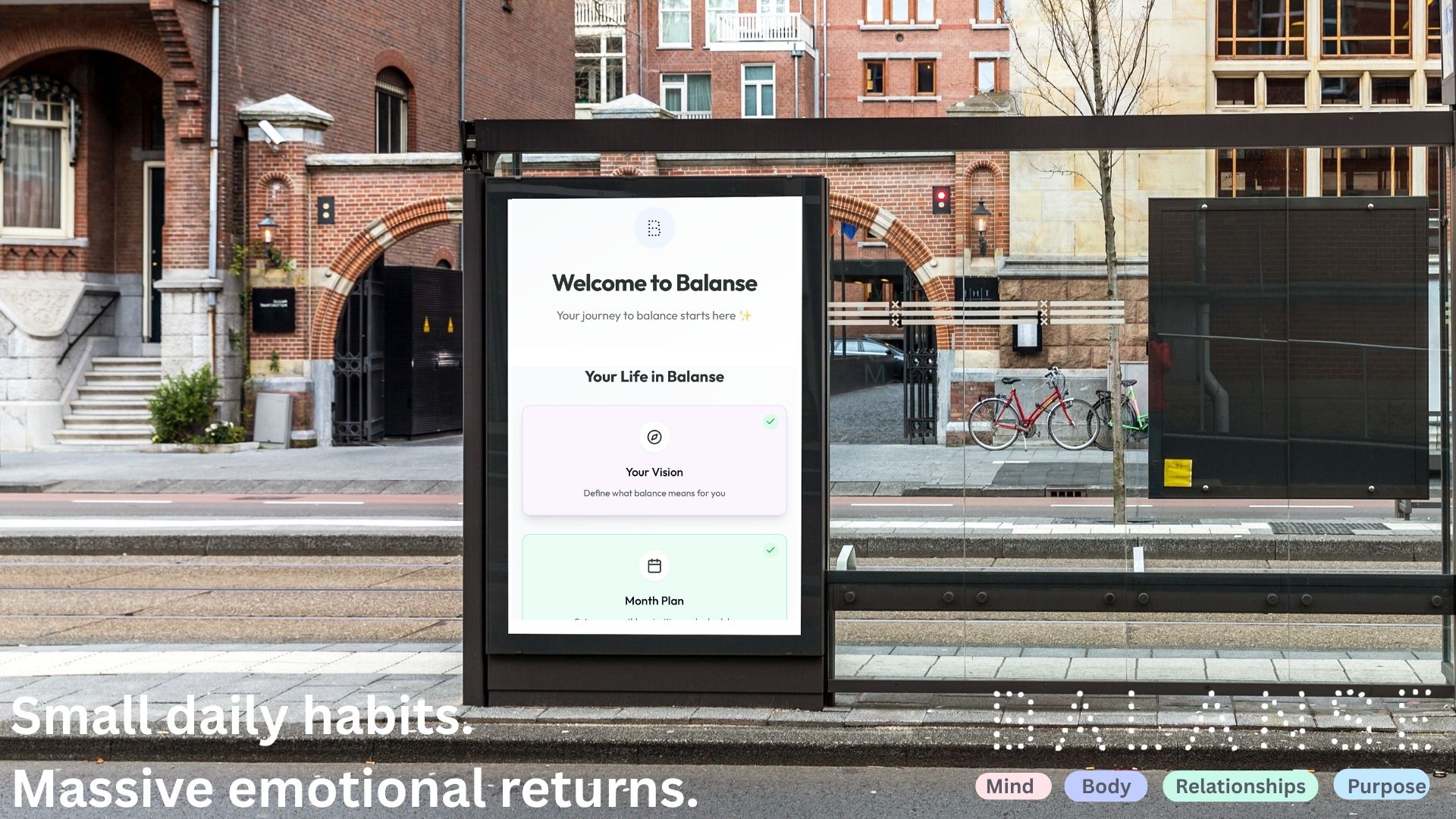
Small daily habits.
Massive emotional returns.
Everything you need to create a life of balance, purpose and fulfilment. Sign up today.