What if doing less is the answer?
Sometimes the most powerful thing you can do for your health is less.
What if doing less is the answer?
The greatest wealth is health. Yet for something so simple, we've made health incredibly complicated.
Our bodies have become projects
Every day we're told about another thing we should be doing. Cold plunges. Red light therapy. Continuous glucose monitors. Sleep trackers. Morning routines. Evening routines. Breathwork. Ice baths. Optimised hydration. Gut protocols. Longevity supplements.
Our bodies have become projects.
To be clear, I'm not talking about practices you genuinely need. If your doctor has prescribed something, if a particular routine helps you manage a health condition, or if certain tools genuinely support your wellbeing, that's different.
I'm talking about all the additions that were sold to us as the path to feeling better and quietly became another thing to manage.
Maybe you've noticed it too. The morning routine that was supposed to make you feel free now takes ninety minutes. The wellness stack that was supposed to simplify your life requires a spreadsheet. The tracker that was supposed to help you understand yourself now tells you whether you've had a 'good' day before you've even asked yourself how you feel.
And underneath it all, quietly, almost imperceptibly, a small voice asks: Is this what well feels like?
Because sometimes it doesn't. Sometimes it just feels like another job.
Optimisation is anxiety wearing a tracksuit
I think many of us have fallen into something seductive: optimisation. The idea that the body is a system we can perfectly tune. That if we just find the right combination of inputs, habits, supplements, metrics, and protocols, we'll eventually arrive at some polished version of ourselves.
It's an attractive story. It's also exhausting.
Because for some of us, optimisation is simply anxiety wearing a tracksuit.
Tracking everything in order to feel calm can become its own kind of unease. Every biohack you add is a small contract with the future. One more thing to maintain. One more thing to remember. One more thing to feel guilty about when life gets busy and you stop doing it.
The destination keeps moving.
You hit ten thousand steps and discover you should be doing twelve. You improve your sleep and then learn about sleep stages. You clean up your diet and then worry about micronutrients. The list never ends because the business model of modern wellness is often built around addition.
Add this. Try this. Buy this. Track this. Optimise this.
But what happened to simply listening to your body?
Health is a relationship
Somewhere between the science and the algorithm, listening to our bodies became tracking our bodies. Feeling well became optimising for wellness. The journey became a destination. And the destination kept moving further away.
I don't think people keep chasing the next health trend because they're weak or gullible. I think they're overwhelmed.
When information is endless and experts are everywhere, the easiest thing to do is try one more thing. Maybe this will be the thing. Maybe this will fix it. Maybe this will finally make me feel how I want to feel.
So we keep adding. Because adding feels like progress. But sometimes it isn't. Sometimes it's just noise.
The challenge is that nobody else can tell you exactly what your body needs. At some point, health becomes a relationship. And relationships require listening.
The only real filter for all the noise is self-awareness. Knowing yourself. Understanding your patterns. Paying attention to how you actually feel rather than how someone else says you should feel. Noticing what gives you energy. Noticing what drains it. Tracking your mood, not just your macros.
Because once you're connected to what's true for you, the question changes. It stops being, 'Should I try this?' and becomes, 'Do I actually need this?' Those are very different questions.
Via negativa — the power of subtraction
This brings me to an idea that has existed for thousands of years: via negativa, Latin for 'the negative way.'
The principle is simple. Sometimes the most powerful thing you can do is not add something. It's remove something.
We often assume improvement comes from addition. Sometimes improvement comes from subtraction.
Removing the food that makes you feel sluggish. Removing the habit that's draining your energy. Removing the commitment that no longer serves you. Removing the stress you have normalised. Removing the constant stream of inputs competing for your attention.
What if wellbeing isn't something you build by endlessly stacking new things on top of your life? What if it's what remains when you remove what was never helping in the first place?
The basics never lost their power
For me, after spending time recovering from illness recently, I've found myself returning to a simple truth.
The basics never lost their power.
Move your body. Eat real food most of the time. Sleep like sleep matters. Spend time with people you love. Get outside. Laugh. Rest without feeling guilty. Take breaks before your body forces you to.
None of these things are particularly exciting. They won't go viral on social media. Nobody is building a billion-pound company around taking a walk with a friend.
But they work. They've always worked. And they'll still be working long after the latest protocol, supplement, or trend has been replaced by the next one.
Key Takeaway
The greatest wealth really is health.
And the healthiest thing we can do is stop asking what else we need to add and start asking what we can let go of.
Because sometimes the answer isn't more. It's less.
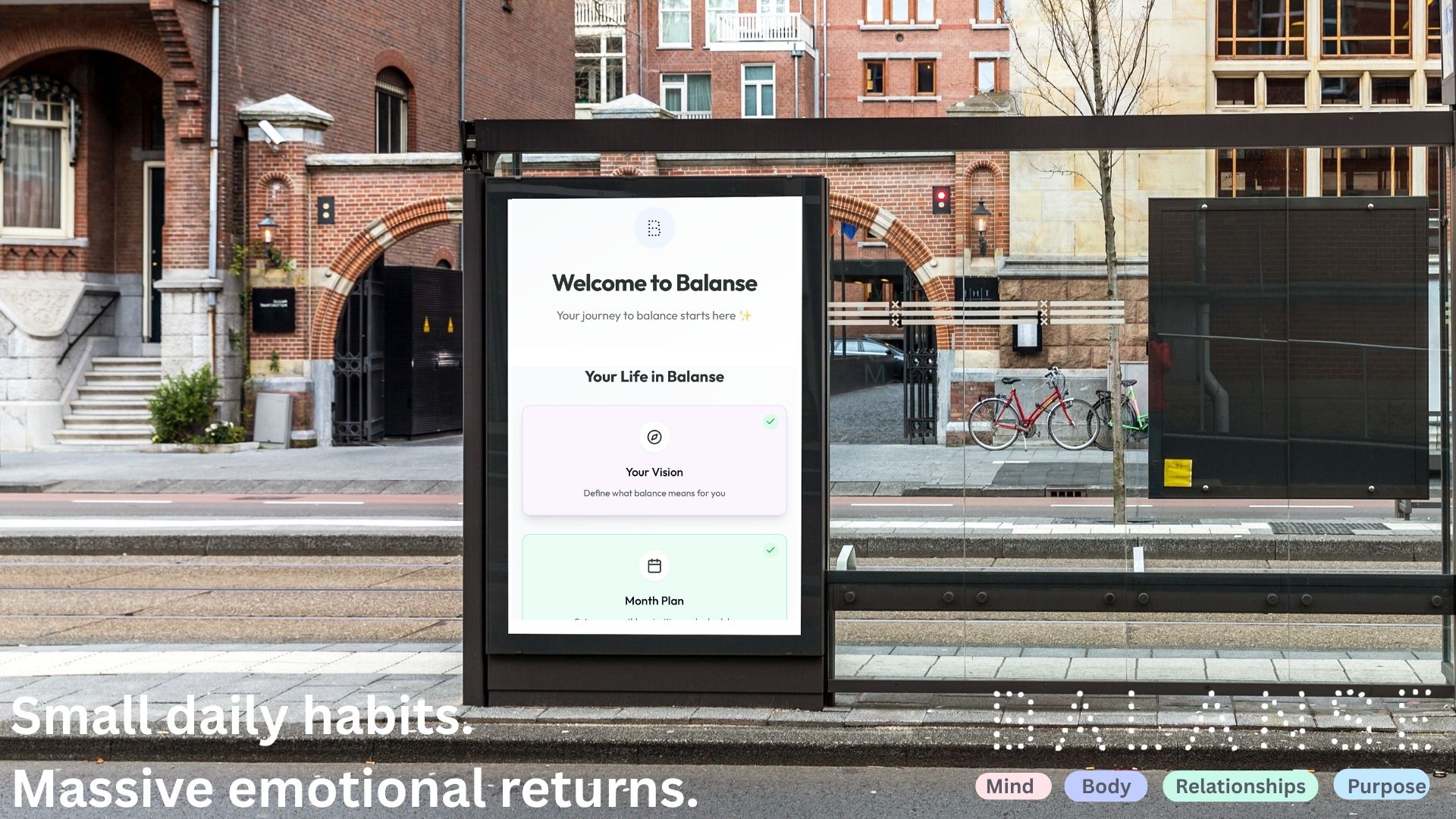
Small daily habits.
Massive emotional returns.
Everything you need to create a life of balance, purpose and fulfilment. Sign up today.