
I was fitting myself into a life that no longer worked
On paper, things looked good. Underneath the functioning, I was trying to fit myself into a life that no longer worked.
I was fitting myself into a life that no longer worked
The most dangerous place to be isn't unhappy. It's fine. You won't feel ready for a reset. Readiness is mostly a myth — it arrives because of the action, not before it.
You won't feel ready. That's not the question.
People ask me: how do I know if I'm ready for a reset?
Here's the honest answer — you won't feel ready. Readiness is mostly a myth. It almost never arrives before the action; it arrives because of it. I didn't wake up one morning feeling prepared to rethink how I was living. I stopped because the old way had stopped working, and pretending otherwise was costing me more every year.
So the better question isn't "am I ready?" It's "am I seeing the signs that I need one?"
The signs are quieter than you'd expect. Your life can still look successful on the outside while feeling deeply misaligned on the inside. You keep performing instead of pausing. You're productive but disconnected. And when anyone asks how you are, the answer is always the same: fine.
The most dangerous place to be isn't unhappy. It's fine.
What the science says
Psychological research shows that emotional awareness is strongly linked to wellbeing — the more precisely you can identify what you're feeling, the better you can regulate it. But when everything becomes "fine," that awareness slowly fades. The more you say it, the less you actually notice how you are. Nothing feels urgent enough to change, but nothing feels meaningful enough to fully engage with either. "Fine" keeps life stable — and keeps it small.
And the four pillars aren't separate. They're one system. When one weakens, the whole system wobbles. My burnout wasn't just a work problem. It was leaking into my body, my relationships, my sense of purpose — the way a masked struggle always does, quietly, for years.
Nothing had gone wrong with me. I had been living in ways that no longer worked. That's it. And that can change.
The practice: ask the honest questions
A reset is not passive. It's intentional. It's creating space to ask the questions the busyness has been drowning out:
What's draining you? What matters to you now? What patterns keep repeating? What am I tolerating? What would alignment actually look like in this season of my life?
Not five years ago. Not the version of success other people expect from you. Now.
And then the question that started everything for me — the one I'd avoided for years:
Honestly, how would you rate your mind, your body, your relationships and your purpose right now?
Key Takeaway
You don't wait to feel ready for a reset. You notice the signs that you need one — and the clearest sign is a life that looks fine on the outside and feels off on the inside.
Diagnosis comes before change. You can't recalibrate from a starting point you can't see.
If you want your real starting point — not a guess — take the free Balanse Reset. It measures all four pillars and shows you exactly where your life is aligned, where it isn't, and where it needs attention first. Take the free Reset → balanse.ai/reset
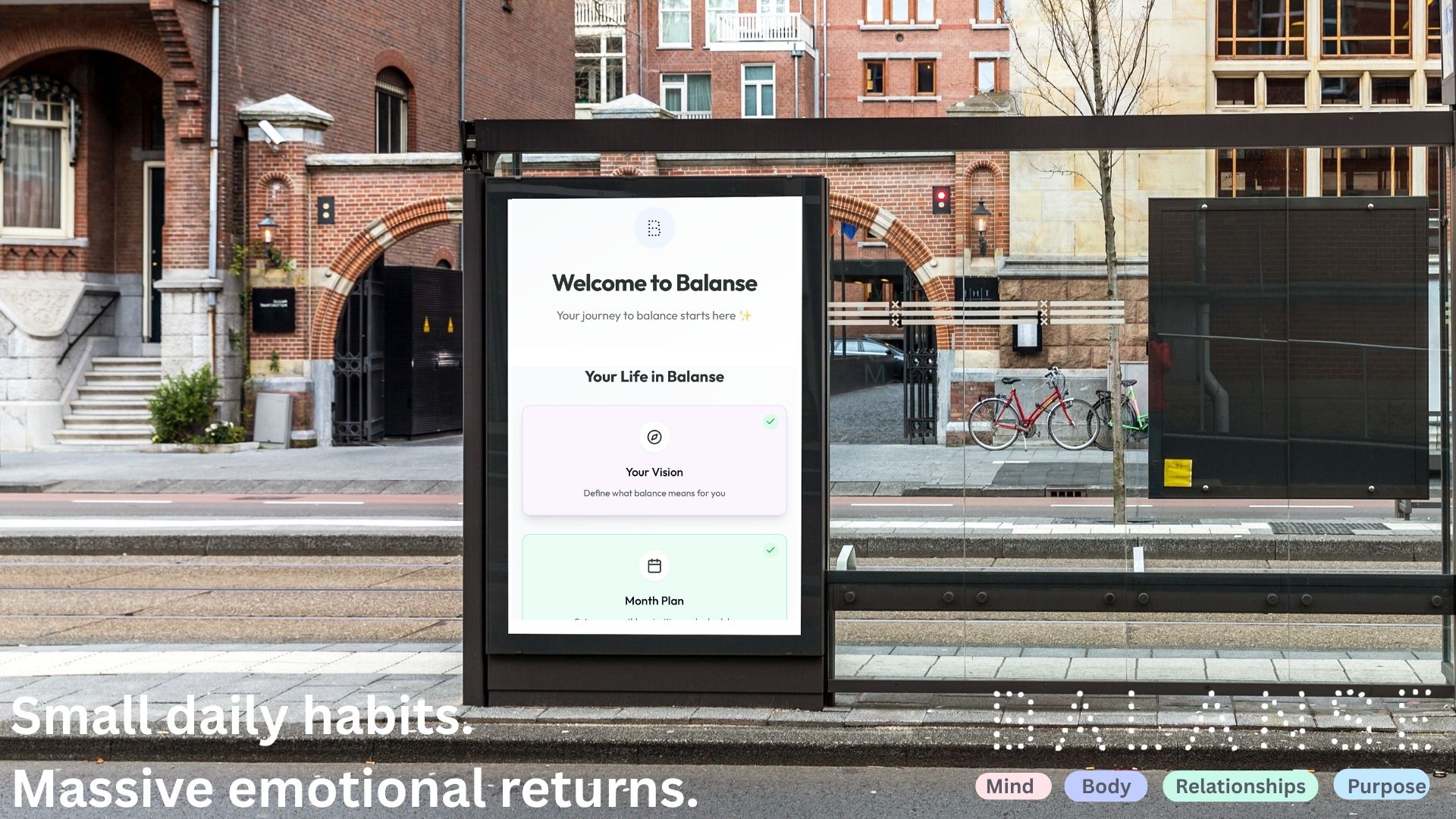
Small daily habits.
Massive emotional returns.
Everything you need to create a life of balance, purpose and fulfilment. Sign up today.