


How gratitude can change your life
Gratitude isn't just nice - it's transformative.
How gratitude can change your life
Gratitude is often dismissed as soft or simplistic. But the research is clear: gratitude is one of the most powerful tools for wellbeing. And it costs nothing.
What the research says
Studies show gratitude:
• increases happiness and life satisfaction
• reduces depression and anxiety
• improves sleep
• strengthens relationships
• boosts immune function
• increases resilience
This isn't woo-woo. It's science.
Why gratitude works
Gratitude shifts attention from what's missing to what's present.
It interrupts negativity bias - the brain's tendency to focus on threats.
It activates reward pathways and releases dopamine and serotonin.
It literally rewires your brain over time.
How to practice gratitude
• Write down 3 things you're grateful for daily
• Be specific (not 'my family' but 'my sister's phone call today')
• Include small things (a warm drink, a kind word)
• Say thank you more often - and mean it
• Notice what you usually take for granted
Common barriers
• "I don't have time" - it takes 2 minutes
• "It feels fake" - start with what's true, even if small
• "Nothing's going right" - even in darkness, small lights exist
Gratitude isn't about denying problems. It's about expanding perspective.
A gratitude challenge
Try this for 7 days:
Every morning, write down 3 things you're grateful for.
Every evening, note one good thing that happened.
Notice how you feel by day 7.
Gratitude is a muscle. The more you use it, the stronger it gets.
Key Takeaway
Gratitude isn't just nice - it's transformative.
It rewires your brain, improves your health, and shifts your experience of life.
Start today. Notice what changes.
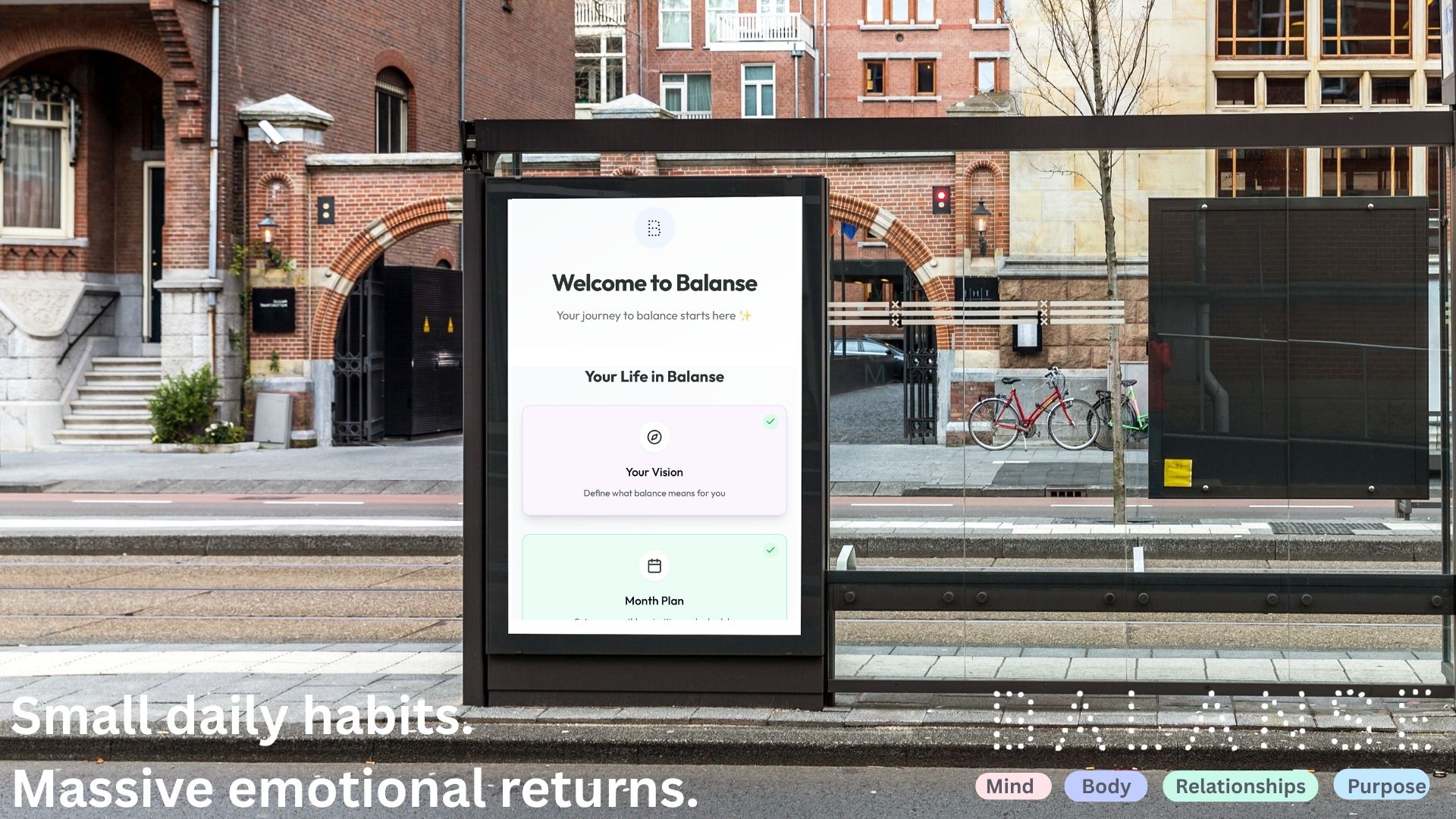

Small daily habits.
Massive emotional returns.
Everything you need to create a life of balance, purpose and fulfilment. Sign up today.