


What is human flourishing? A practical and science-backed view
The phrase human flourishing is appearing more often in conversations about wellbeing, work, and the future of society. But what does it actually mean?
What is human flourishing? A practical and science-backed view
At its simplest, human flourishing describes a life that is not merely functioning, but thriving. It is the experience of living with energy, purpose, connection, and growth over time.
Flourishing is more than happiness
One of the most common misconceptions is that flourishing simply means feeling happy all the time. Research in psychology suggests otherwise.
Psychologist Martin Seligman, one of the founders of positive psychology, describes flourishing as a combination of five elements: positive emotion, engagement, relationships, meaning, and accomplishment. This framework, known as the PERMA model, highlights that wellbeing is multi-dimensional.
People flourish when they experience positive emotions, but also when they are deeply engaged in activities, connected to others, working toward meaningful goals, and growing through challenge.
This explains why someone can feel fulfilled while working hard toward something meaningful, even if the process involves effort and difficulty.
Flourishing is not constant pleasure. It is living in a way that feels purposeful and alive.
The role of the body and brain
Modern neuroscience and physiology reinforce the idea that flourishing is deeply connected to how we regulate our bodies and minds.
Our nervous system constantly scans for signals of safety or threat. Chronic stress keeps the body in a state of high alert, activating the sympathetic nervous system and increasing cortisol levels. Over time this state can lead to fatigue, anxiety, reduced concentration, and burnout.
Practices that support flourishing often involve regulating the nervous system and improving physical health. Sleep, movement, nutrition, and breathing patterns influence brain chemistry and emotional resilience. Research from neuroscience labs, including work on stress regulation and neuroplasticity, shows that consistent habits can reshape how the brain responds to challenges.
In practical terms, flourishing requires energy. When the body is depleted, it becomes difficult to sustain focus, creativity, or positive relationships.
Human beings are social creatures
Another consistent finding in wellbeing research is the importance of relationships.
Long-running studies on adult development have shown that strong social connections are one of the most reliable predictors of long-term wellbeing and life satisfaction. Humans evolved as cooperative social beings, and our brains respond strongly to connection, belonging, and trust.
Flourishing therefore involves more than personal achievement. It includes meaningful relationships, contribution to others, and a sense of belonging in a community.
Isolation and loneliness undermine wellbeing, while supportive relationships strengthen resilience and emotional health.
Meaning and purpose matter
People also flourish when their lives feel meaningful.
Meaning often comes from pursuing goals that matter, contributing to something larger than ourselves, or developing our abilities in ways that benefit others. Research in motivational psychology shows that purpose provides a powerful source of direction and persistence.
When people feel connected to a purpose, they are more likely to maintain healthy behaviours, overcome setbacks, and experience deeper satisfaction.
Purpose does not have to be grand or world-changing. It can be found in raising a family, building a business, helping a community, or pursuing creative work. What matters is that the individual experiences their actions as meaningful.
Flourishing is built through daily life
Although the idea of flourishing may sound abstract, it emerges from very practical behaviours.
Research in behavioural science shows that small daily habits shape long-term outcomes. Repeated actions gradually become automatic patterns that influence identity and lifestyle.
This means flourishing is less about occasional breakthroughs and more about consistent daily choices.
How we start the day, how we care for our bodies, how we connect with others, and how we direct our attention all accumulate over time.
Days compound into weeks, weeks into years, and years into the life we experience.
A practical framework for flourishing
From a practical perspective, flourishing can be supported by focusing on four core areas of life.
The mind includes learning, reflection, emotional awareness, and mental clarity. Practices like meditation, journaling, and learning new skills strengthen cognitive flexibility and self-awareness.
The body provides the physical foundation for everything else. Movement, sleep, nutrition, and recovery support energy and resilience.
Relationships provide connection and belonging. Investing time in family, friendships, and community strengthens emotional wellbeing.
Purpose gives direction. Meaningful work, creative expression, or contribution to others helps people feel that their lives matter.
When these areas are balanced and aligned, individuals are far more likely to experience sustained wellbeing.
Why flourishing matters now
In a rapidly changing world, human flourishing is becoming increasingly important.
Technological change, economic uncertainty, and constant digital distraction can make it easy for people to become reactive rather than intentional in their lives. Many people feel busy yet disconnected from what actually matters to them.
A focus on flourishing shifts the conversation from simply coping with modern life to designing a life that supports wellbeing and meaning.
Instead of asking how to survive stress and pressure, the question becomes how to live in a way that allows individuals and communities to thrive.
The path to flourishing
Human flourishing does not arrive overnight. It emerges gradually as people become more aware of their lives, align their actions with their values, and build habits that support wellbeing.
Small changes repeated consistently can transform how a person feels, thinks, and lives over time.
Flourishing is not reserved for a few fortunate individuals. It is something that can be cultivated intentionally.
It begins with a simple shift: moving from drifting through life to consciously designing it.
Key Takeaway
Flourishing is built one day at a time — because the way we live our days becomes the life we experience.
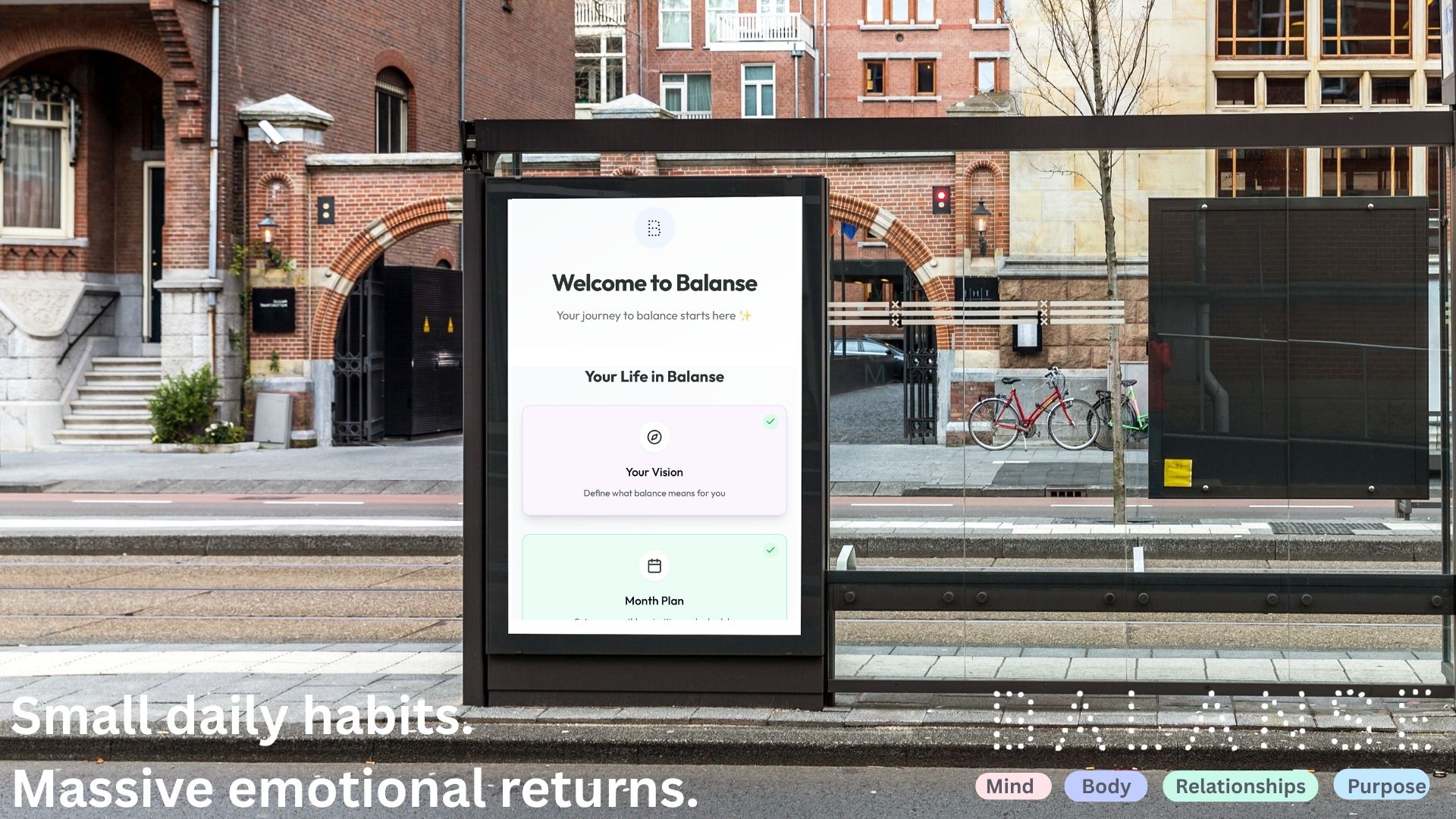

Small daily habits.
Massive emotional returns.
Everything you need to create a life of balance, purpose and fulfilment. Sign up today.