The myth of being ready
Why action creates motivation (not the other way around)
The myth of being ready
One of the questions people ask surprisingly often is this: How do I do the things I know I should be doing, but for some reason they feel like too much - even though I know they would bring a big reward if I just started and kept going?
An emotional problem, not a productivity one
At first glance this sounds like a productivity problem.
But it rarely is.
It's usually an emotional one.
The things that feel like "too much" are rarely too much because they are difficult. They feel heavy because of the meaning we attach to them.
Expectation.
Fear of failure.
Fear of judgement.
Fear of discovering we might not be as capable as we hoped.
And sometimes the opposite fear appears too - the fear of what it would mean if it actually worked.
So instead of starting, we wait.
We tell ourselves we'll begin when we feel clearer, more confident, more prepared.
When we feel ready.
But the longer we wait, the heavier the thing becomes.
Ideas gather pressure.
Dreams turn into obligations.
And something that once felt exciting slowly starts to feel intimidating.
Readiness rarely arrives first
One of the most useful shifts I've learned is this:
Stop trying to feel ready.
Readiness is mostly a myth.
Or at least, it almost never arrives before the action does.
It arrives because of the action.
You don't suddenly feel capable and then begin.
You begin, and slowly start to feel capable.
Confidence is rarely the cause of action.
More often, it is the result of it.
Make the step smaller than your resistance
When something feels overwhelming, the most effective strategy is surprisingly simple:
Make the step smaller than your resistance.
Not:
"I'll write the whole proposal."
Instead:
"I'll open the document and write one idea I have right now, unfiltered."
Not:
"I'll work out for an hour."
Instead:
"I'll put my shoes on and step outside."
Laughably small.
Deliberately unthreatening.
Your brain cannot argue with something that tiny.
And when the step is small enough, starting becomes easier than avoiding it.
Let the small wins land
There is another part of this process that people often skip.
When you complete the small step, notice it.
Don't rush straight past it.
Let it land.
That moment is important because it sends a signal to your nervous system:
I started.
It was okay.
I can do this.
Each small completion becomes data.
Evidence.
Proof that the action is possible.
And when you repeat this process often enough, the emotional weight attached to the task begins to lift.
What once felt overwhelming starts to feel manageable.
The reward begins when you start
Many people imagine the reward waiting somewhere far in the future.
At the end of the project.
At the completion of the goal.
But something interesting happens when you begin.
The reward actually starts the moment you take action.
Movement creates energy.
Progress creates motivation.
And the simple act of beginning shifts your relationship with the thing you were avoiding.
When dreams become tasks
There's another subtle trap we fall into.
We take something that once felt exciting - a dream, an idea, a possibility - and we turn it into a task.
A checklist item.
An obligation.
And the moment that happens, the emotional energy disappears.
Instead of feeling inspired, we feel pressured.
Instead of curiosity, we feel resistance.
But the dream itself hasn't changed.
Only the way we relate to it has.
When you reconnect with the feeling behind the idea - the excitement, the curiosity, the sense of possibility - something shifts.
The work becomes lighter.
State matters more than the task
The same action can feel completely different depending on the state you bring to it.
You can approach something with tension, pressure, and self-doubt.
Or you can approach it with curiosity, energy, and playfulness.
The action may look identical on the outside.
But internally, the experience is completely different.
Your state matters.
Because state determines whether you experience something as struggle or momentum.
Build a system that supports you
One of the most powerful ways to make progress easier is to build a simple system around your life.
For example:
Block 30 minutes a day for something that matters to you.
Not when you feel inspired.
Not when everything else is finished.
But intentionally.
This doesn't mean rejecting other responsibilities.
It means designing your day so that what matters actually has space to exist.
When you build systems like this, discipline becomes easier.
Because the environment supports the behaviour.
Confidence grows through repetition
At first, the results may not be visible.
That's normal.
Growth is a muscle.
It develops through repetition.
Each time you start, you strengthen the habit of starting.
Each time you act, you build a little more certainty.
Over time, that certainty becomes confidence.
Not because you waited until you were ready.
But because you proved to yourself, again and again, that you could begin.
A simple reminder
If you're waiting to feel ready, you may be waiting a very long time.
Instead, try something smaller.
Take one step.
Let it be imperfect.
Let it be small.
But let it begin.
Because the truth is simple:
You don't become ready and then act.
You act, and then readiness follows.
And often, the moment you begin is the moment everything starts to change.
Key Takeaway
You don't become ready and then act. You act, and then readiness follows. Confidence is rarely the cause of action. More often, it is the result of it. And often, the moment you begin is the moment everything starts to change.
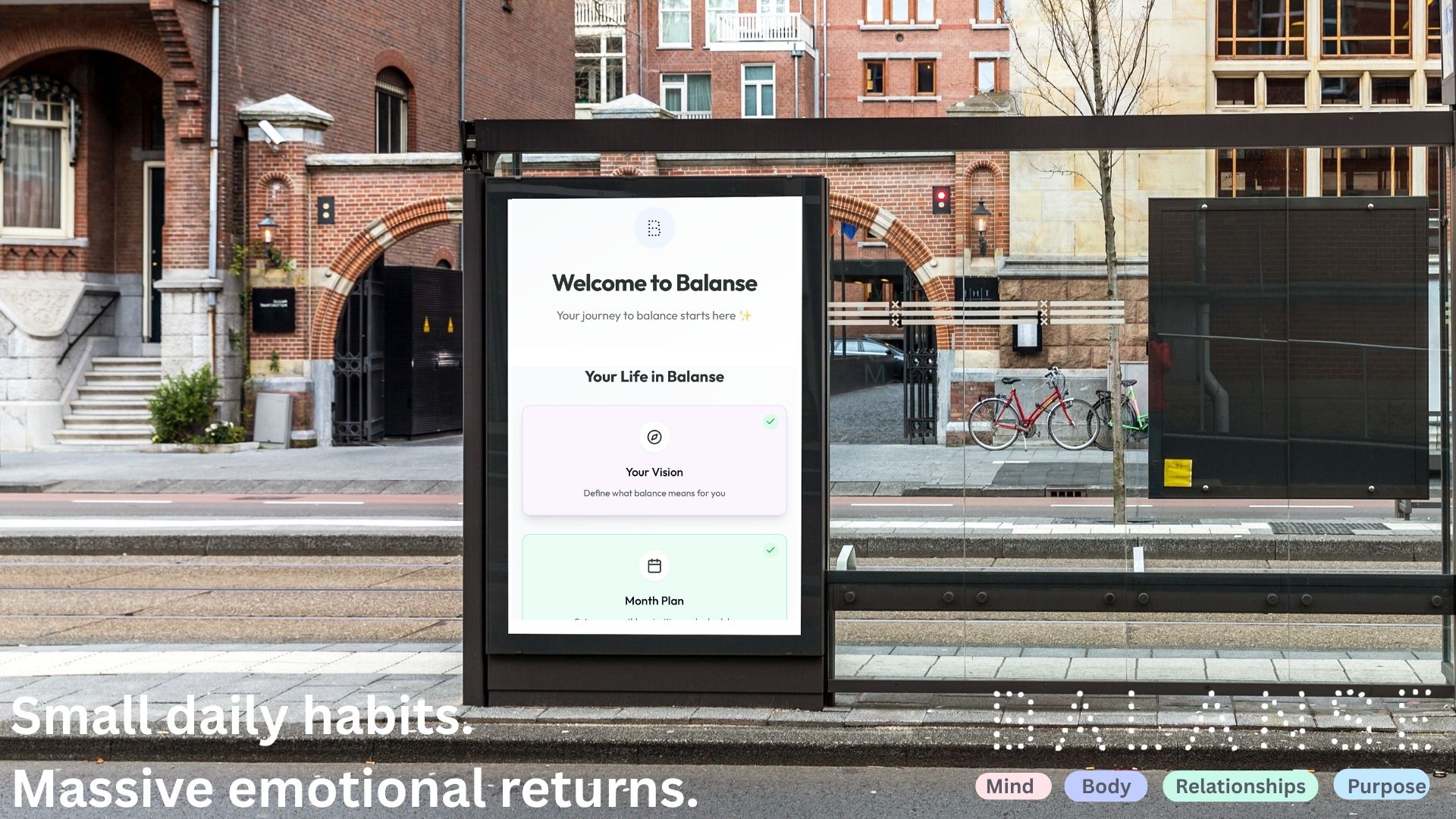
Small daily habits.
Massive emotional returns.
Everything you need to create a life of balance, purpose and fulfilment. Sign up today.