
The psychology of drift: Why smart people end up living lives they didn’t design
Most people don’t consciously choose a life that feels misaligned.
The psychology of drift: Why smart people end up living lives they didn’t design
Most people don’t consciously choose a life that feels misaligned. They drift into it, one small reactive decision at a time.
Drift happens because life moves fast
Modern life rewards speed.
Respond quickly.
Produce more.
Stay connected.
Keep moving.
But when everything moves quickly, reflection disappears.
You stop asking the deeper questions.
What do I actually want?
What matters most to me?
Where am I trying to go?
Without those questions, decisions become reactive rather than intentional.
And reactive decisions slowly create reactive lives.
Success can hide drift
One of the reasons drift is so common among intelligent, capable people is that success masks it.
If things are working externally — promotions, income, recognition — there is little reason to pause and question the direction.
The momentum feels good.
But success and alignment are not always the same thing.
You can be successful at something you never consciously chose.
The autopilot effect
The brain is designed to conserve energy.
Once patterns become familiar, they move onto autopilot.
You wake up at the same time.
Follow the same routines.
Respond to the same pressures.
Autopilot makes life efficient.
But it also means we stop noticing when something is no longer working.
Psychologist Carl Jung described this perfectly:
“Until you make the unconscious conscious, it will direct your life and you will call it fate.”
Drift is simply unconscious living.
The moment awareness returns
The interesting thing about drift is that it can continue for years — until something interrupts it.
Burnout.
A life transition.
A question you can’t ignore anymore.
Often it begins with a simple realisation:
Something about my life doesn’t feel quite right.
That moment of awareness is incredibly important.
Because once you see drift clearly, you regain the ability to design your life intentionally.
Designing your life again
Alignment doesn’t require a dramatic reinvention.
It begins with small shifts in awareness and behaviour.
Understanding your values.
Designing how you want your days to look.
Building habits that support that direction.
Over time those small changes compound.
The direction of your life begins to shift.
Because ultimately your life isn’t shaped by occasional big decisions.
It’s shaped by the patterns you repeat every day.
Key Takeaway
Drift is simply unconscious living. Once you see it clearly, you regain the ability to design your life intentionally through the small patterns you repeat every day.
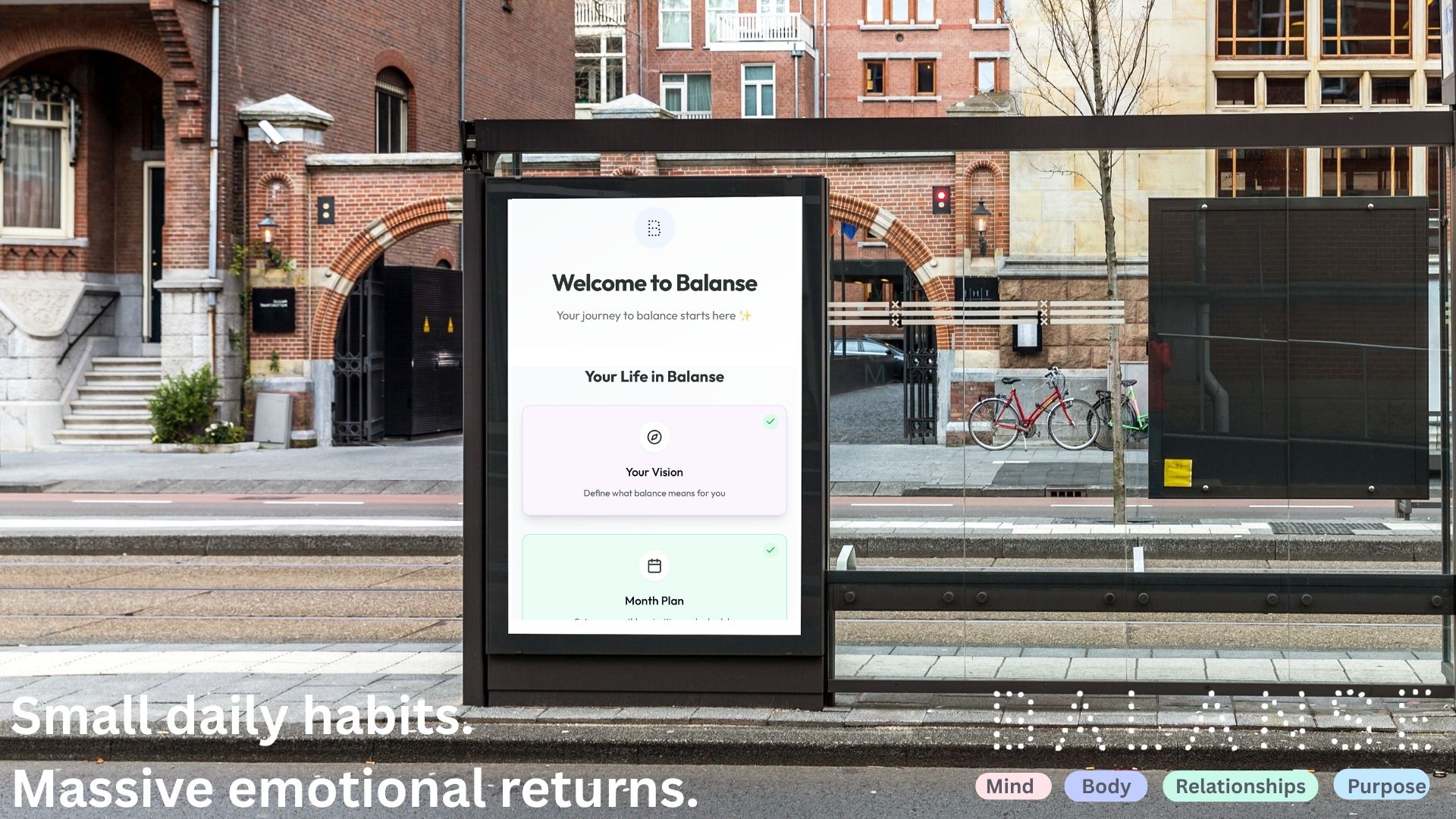
Small daily habits.
Massive emotional returns.
Everything you need to create a life of balance, purpose and fulfilment. Sign up today.