
The silent epidemic of high-functioning burnout (and why it's not just about work)
Burnout rarely looks the way people expect.
The silent epidemic of high-functioning burnout (and why it's not just about work)
Burnout rarely looks the way people expect. High-functioning burnout is the person who still shows up, still delivers, and still performs — while internally knowing the system is no longer sustainable.
How high-functioning burnout happens
Burnout rarely comes from a single event. It builds slowly through patterns.
Too many demands.
Too little recovery.
Too many responsibilities competing for attention.
Over time your nervous system stays in a constant state of activation.
You become used to pushing through fatigue. Ignoring signals from your body. Delaying rest. Delaying reflection.
For a while this works.
Until it doesn’t.
Because your body stores what your mind ignores.
Tension shows up physically.
Sleep becomes inconsistent.
Back pain appears.
Energy drops.
And yet many people continue to perform well enough that no one notices.
Including themselves.
Why smart people are particularly vulnerable
High-functioning burnout often affects capable, ambitious people.
The ones who care deeply about doing things well.
They take on responsibility easily. They push themselves harder than most. They’re used to solving problems and delivering results.
But ambition without reflection can quietly become overextension.
And when your identity becomes tied to productivity, slowing down can feel uncomfortable or even threatening.
So the pattern continues.
Until something forces a reset.
Burnout isn’t just about work
It’s easy to blame burnout on work alone, but in reality burnout is often the result of misalignment across several parts of life.
Work that no longer feels meaningful.
Relationships that lack presence or connection.
Health habits that have gradually slipped.
Time and attention constantly fragmented.
Burnout isn’t simply exhaustion.
It’s the feeling that your energy is being spent in ways that no longer reflect what matters most.
The shift that changes everything
The solution to burnout is rarely “try harder”.
In fact, trying harder is often what caused the problem.
What’s needed instead is awareness.
A moment to pause and ask honest questions.
What is actually draining me?
What gives me energy?
Where has my life drifted away from my values?
Because burnout is often a signal.
Not that you’re weak.
But that something in your life needs to change.
The goal isn’t simply to recover energy.
It’s to realign how you live your days.
Key Takeaway
Burnout is often a signal. Not that you’re weak, but that something in your life needs to change. The goal isn’t simply to recover energy. It’s to realign how you live your days.
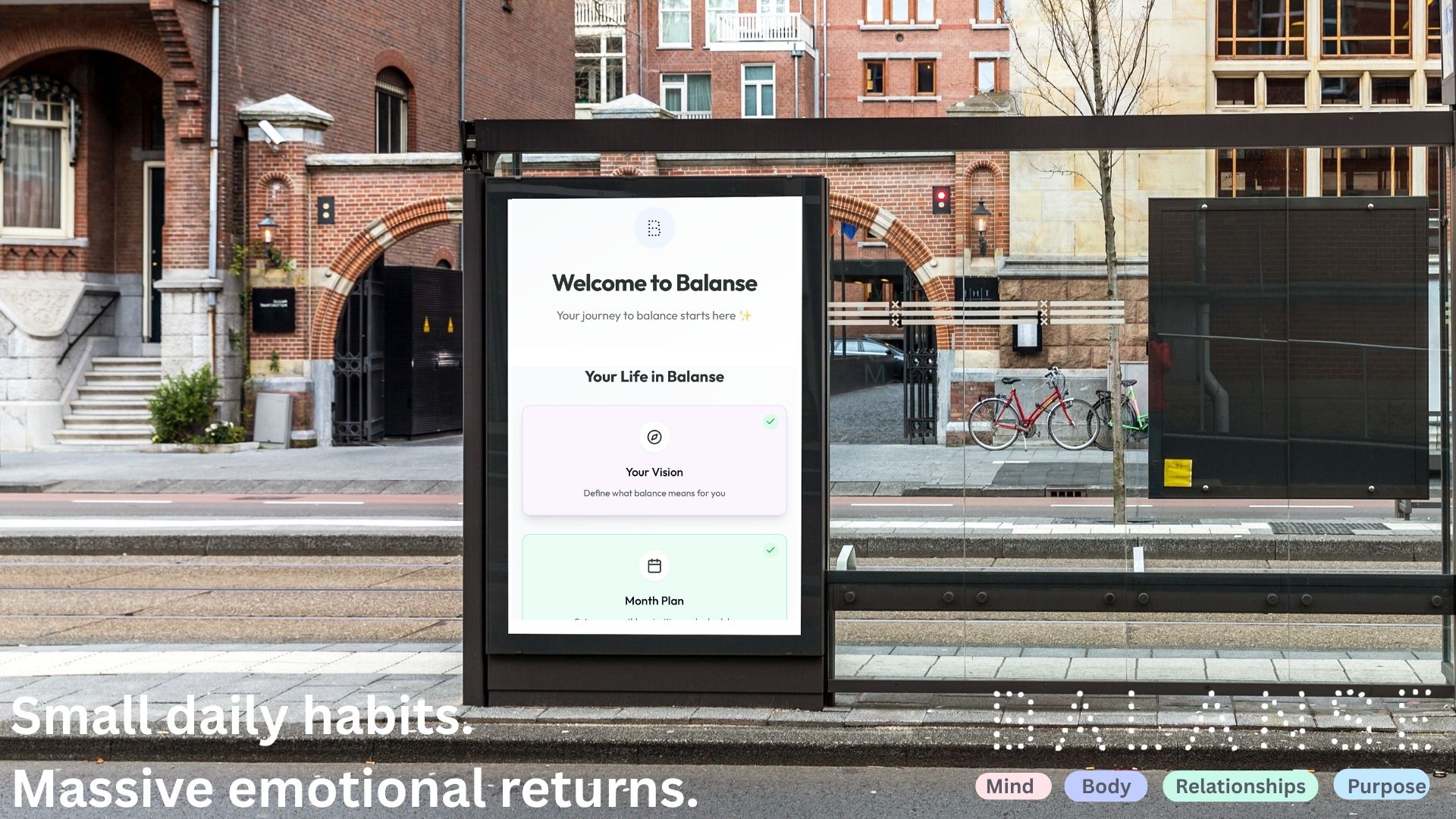
Small daily habits.
Massive emotional returns.
Everything you need to create a life of balance, purpose and fulfilment. Sign up today.