
Your values & beliefs determine your direction (not your circumstances)
Values: act like an internal compass. Beliefs: The Filter That Creates Pain or Pleasure
Your values & beliefs determine your direction (not your circumstances)
We often assume our lives are shaped by conditions. But conditions don't determine direction. Values do. This framework explores how beliefs, values, and decisions shape every aspect of your life.
First, let's understand the difference
Beliefs are interpretations you've learned: what you think is true about yourself, others, and the world.
Values are what you decide matters most: what you are willing to prioritise and act on.
Beliefs are often inherited or formed unconsciously. Values, however, can be consciously chosen.
All beliefs carry consequences
Every belief has a behavioural consequence. Not some beliefs. Not the "big" ones only. All beliefs. Because human behaviour is belief-driven.
You don't act based on reality. You act based on what you believe reality means.
If you believe "People can't be trusted" → You guard yourself. "Hard work always pays off" → You persist longer. "I'm bad with money" → You avoid financial responsibility. "Discomfort leads to growth" → You lean into challenge.
The belief determines the behaviour. The behaviour determines the results. The results reinforce the belief. That loop runs automatically.
A belief is a feeling
Most people think beliefs are logical conclusions. They're not. A belief is a feeling of certainty about what something means.
It's the moment your mind says: "This means I'm not good enough." "This means I'm respected." "This means I'm safe." "This means I'm in danger."
That feeling of certainty is what drives action. Two people can hear the same feedback: One feels certain it means rejection. The other feels certain it means improvement. Same words. Different meaning. Different behaviour.
Values shape your direction
Values act like an internal compass. They quietly guide how you spend your time, what you prioritise, and what you are willing to sacrifice for.
If you value comfort, you'll naturally avoid risk. If you value growth, you'll walk toward challenge. If you value approval, you'll shape your life around others' expectations. If you value purpose, you'll endure discomfort to build something meaningful.
You don't decide your direction once. You decide it repeatedly, through the values you live by — not the ones you claim, but the ones your actions reveal.
Decisions move you faster than conditions
Many people wait for better conditions before they act: "When things settle down…" "When I have more confidence…" "When the timing is right…"
But progress is not condition-driven. It is decision-driven. Conditions influence the pace, not the path.
A clear decision cuts through uncertainty. It creates movement even in imperfect situations. Most meaningful change begins in messy, inconvenient, or even painful conditions — because decisions, not environments, create momentum.
Beliefs: the filter that creates pain or pleasure
If values set direction, beliefs determine how the journey feels.
Beliefs are the interpretations you attach to experience. They shape what you understand events to mean — and that meaning is what generates pain or pleasure.
Two people can face the same setback: One believes, "This proves I'm not capable" → Pain. The other believes, "This is feedback that will make me better" → Growth.
The event is identical. The belief transforms the emotional outcome. Your beliefs don't just describe reality; they actively create your experience of it.
Why beliefs feel 'fixed' (even when they aren't)
Beliefs get wired through repetition and emotional experience. If something once caused strong pain or pleasure, your brain stored a meaning to protect you.
For example: If failure once led to embarrassment → you may believe failure is dangerous. If achievement brought approval → you may believe worth comes from success.
These beliefs aren't facts. They are conclusions your mind made earlier — often when you had less perspective than you do now.
How beliefs actually change
Beliefs don't shift because you want them to. They shift when you challenge them with new evidence and behaviour.
You don't think your way into a new belief. You act your way into one.
1. Notice the belief: "I avoid speaking up because I believe I'll get it wrong."
2. Question its usefulness: "Is this belief helping me live the life I want?"
3. Test a different action: Do the opposite once — speak up anyway.
4. Let experience update the belief: The brain rewrites beliefs when reality contradicts expectation.
Beliefs are predictions. Change the experience, and you change the prediction.
Can you change your values?
Yes — but values change through deliberate choice, not accident.
Many people live by default values: Security because they were taught to avoid risk. Approval because they were rewarded for pleasing others. Achievement because they learned success equals worth.
At some point, you can decide: "These were inherited values. What do I actually want to stand for?"
Values become real only when they show up in behaviour. You don't discover values — you practice them.
If you say you value growth, but avoid discomfort, comfort is your true value. If you repeatedly choose the hard thing, growth becomes your value.
A simple way to start
Ask yourself:
What belief is currently limiting me?
What value would I rather live by?
What one action today would express that value?
Then do that action before you feel ready. That's how change actually begins.
Key Takeaway
Your life is not steered by what surrounds you. It is steered by what you choose to stand for. You can change your values and beliefs. But they don't change the way habits do. They change through awareness, evidence, and repeated decisions. You cannot instantly change how you feel. But you can immediately change what you do. And repeated action reshapes belief. Reshaped belief reinforces new values. New values change your direction.
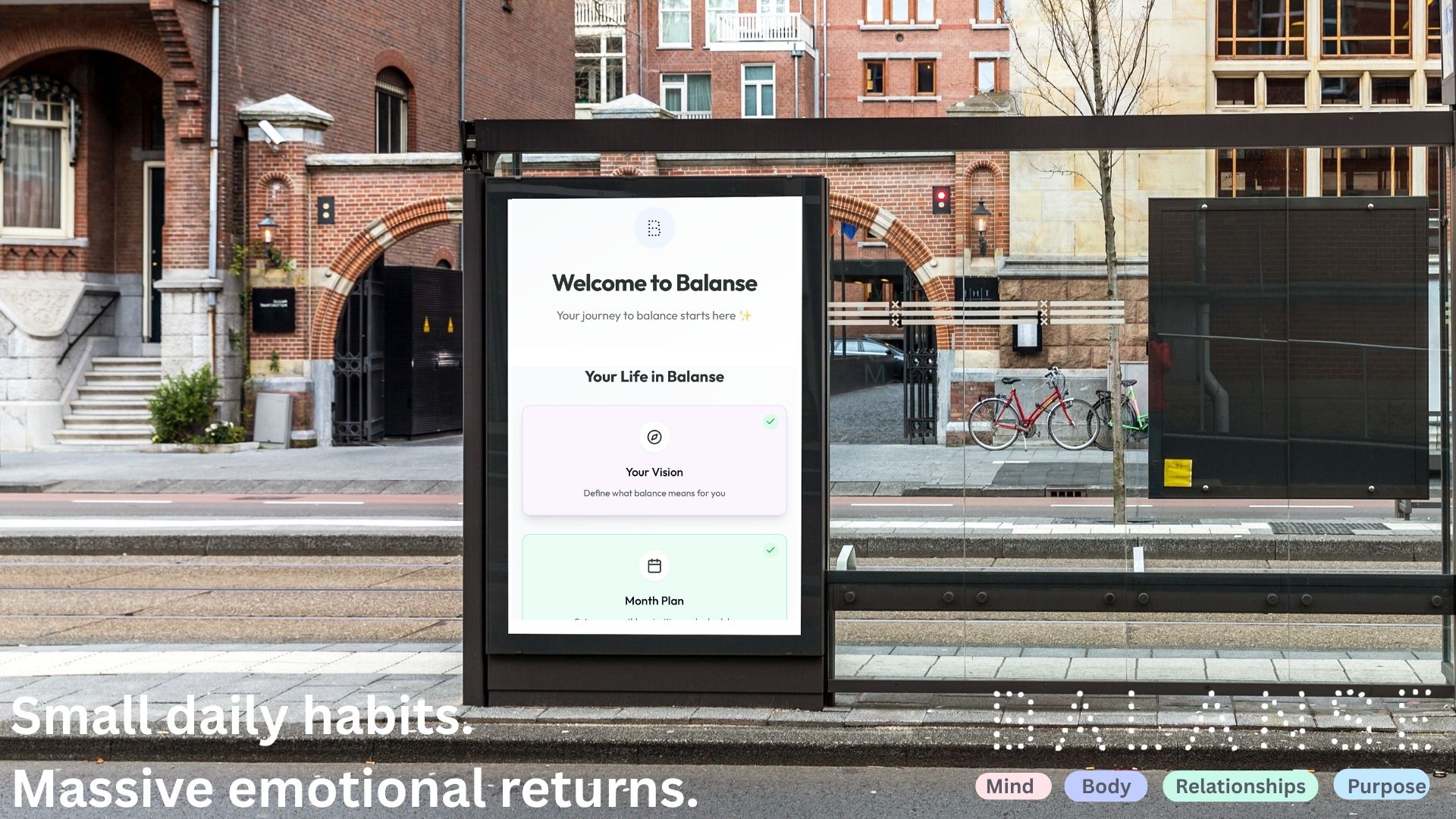
Small daily habits.
Massive emotional returns.
Everything you need to create a life of balance, purpose and fulfilment. Sign up today.